Why CAIA prioritizes a platform approach to scale cancer research
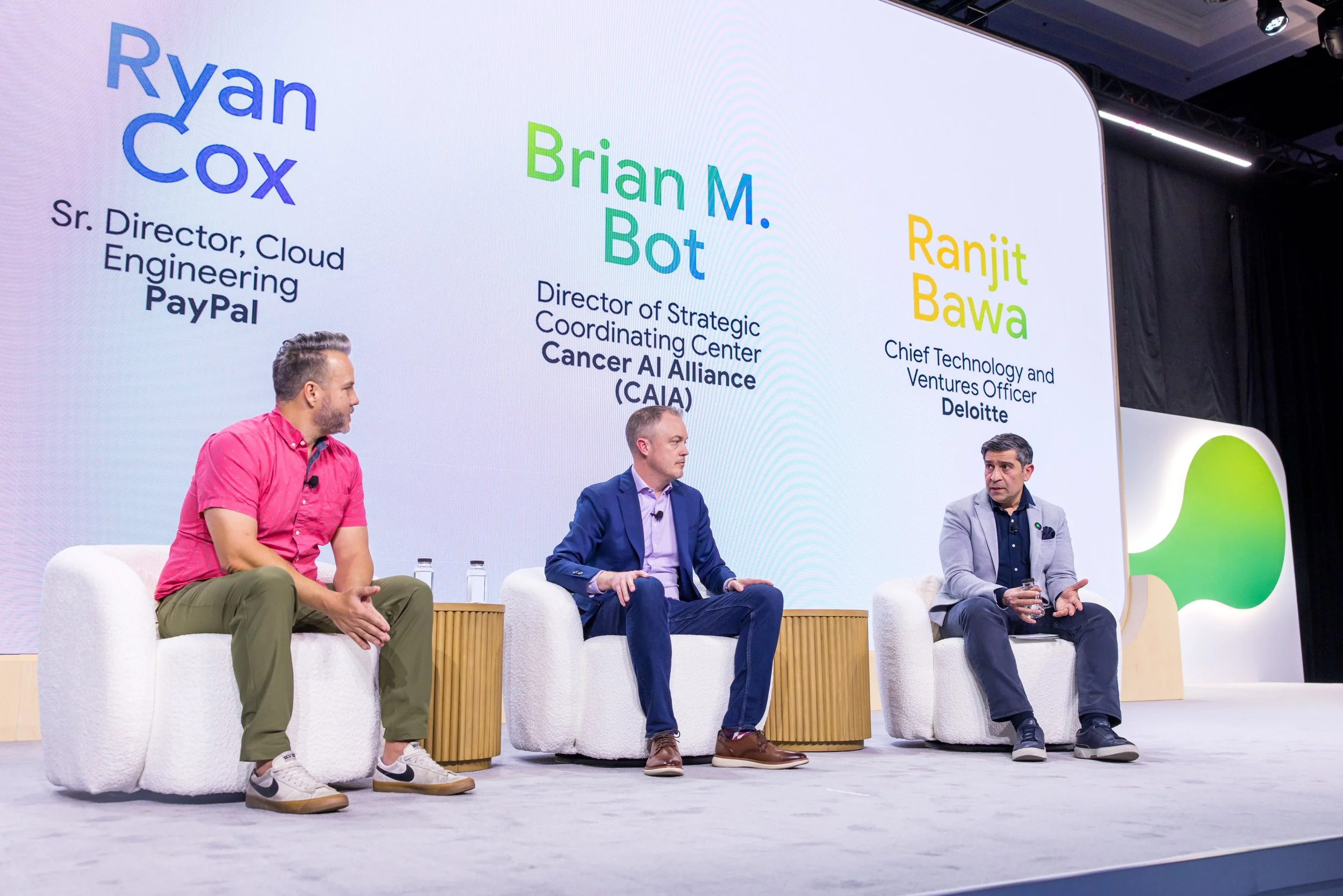
At Google Cloud Next ‘26, CAIA’s Brian M. Bot participated in a panel discussion with leaders from PayPal and Deloitte about the increasing focus on how organizations realize value from AI.
In this conversation, Brian highlighted how the Cancer AI Alliance (CAIA) is leading a transformation in cancer research by enabling a platform approach across multiple institutions.
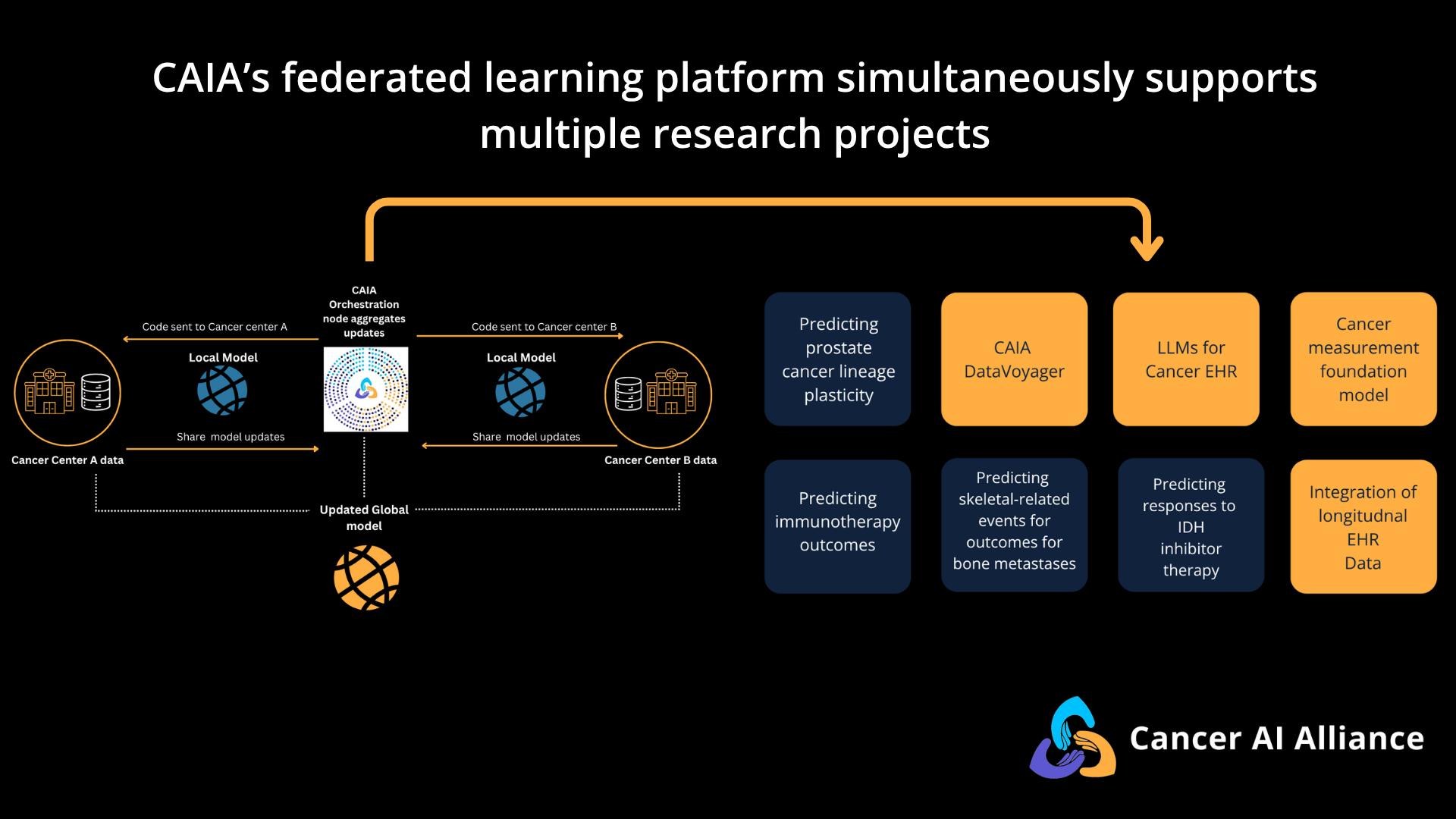
CAIA’s platform enables multiple research projects
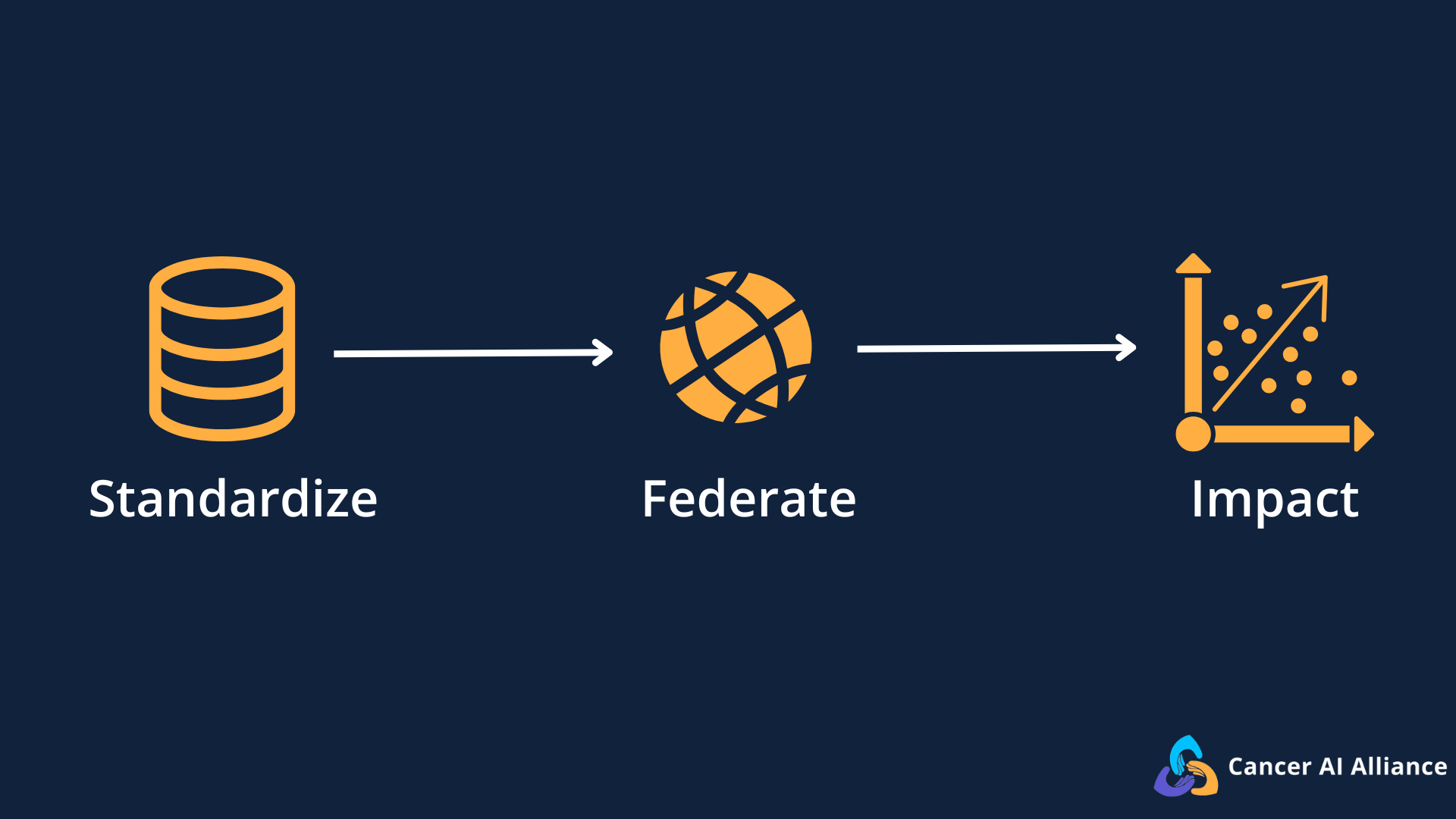
Brian explained that CAIA launched its federated learning platform to enable cancer centers to compile and re-use federated datasets, allowing many researchers to answer different types of questions. This is a departure from traditional biomedical research, where protocols are designed "to answer one very specific question."
By focusing on the foundational infrastructure, CAIA ensures that the platform can support a multitude of projects simultaneously with federated data across the entire network.
Additionally, research conducted at a single center may not translate to other populations. By training across multiple centers on CAIA’s federated learning platform, AI models are more robust and accurate for a wider variety of patients.
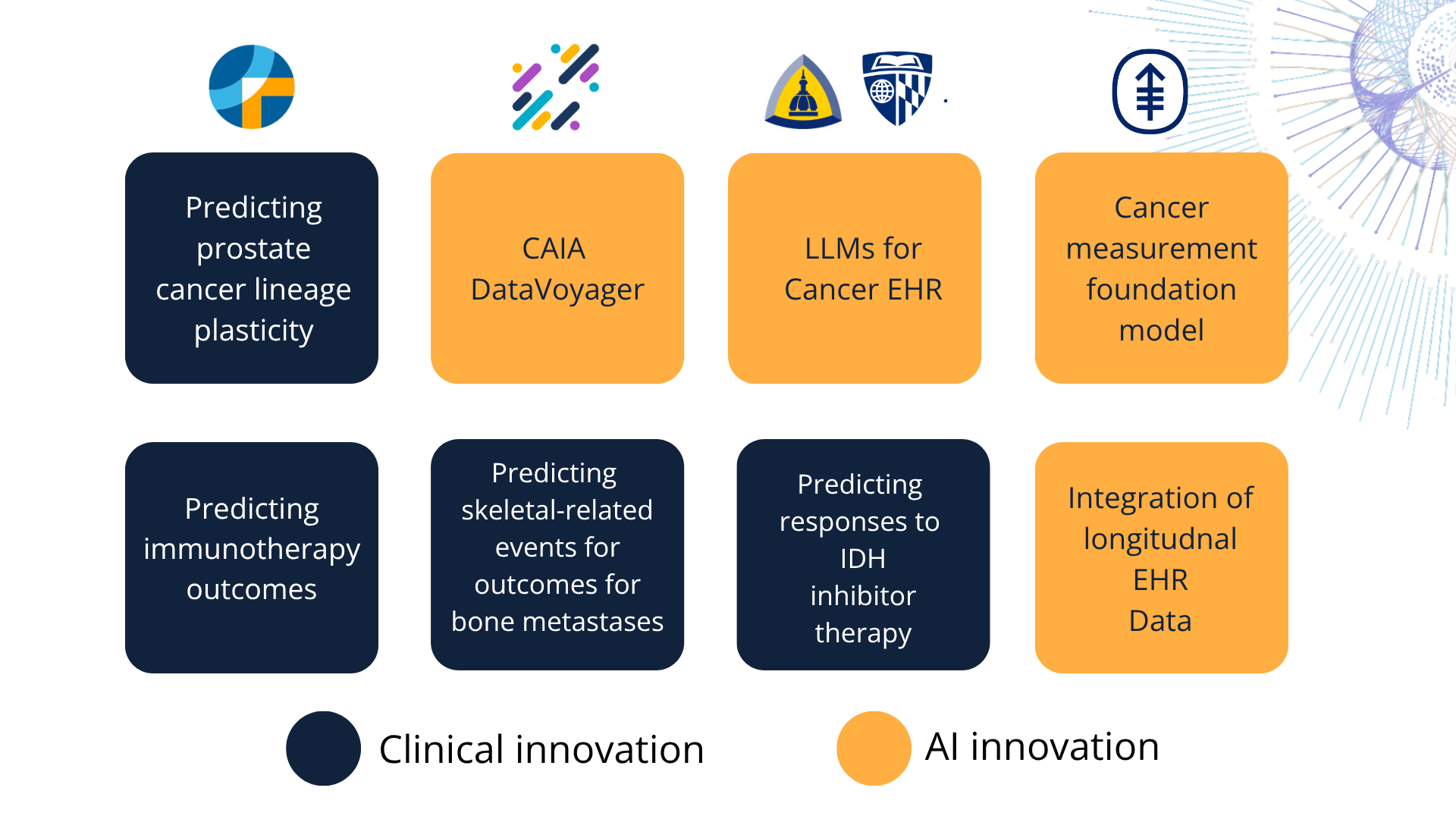
See our recent blog post on some of the projects that are currently being piloted on our federated learning platform.
Prioritizing structural agility and adaptability
When asked about how CAIA might respond to new innovations in AI, Brian pointed out that by focusing on a core platform, new innovations can be layered on as they emerge, ensuring that CAIA’s foundation survives shifting tech roadmaps.
This "structural agility" provides CAIA the ability to pivot as newer architectures and approaches emerge. Since the platform is built to be modular, CAIA can integrate new innovations as they come to market, allowing the platform to remain at the cutting edge without needing to rebuild its core stack.
Federated learning and data security
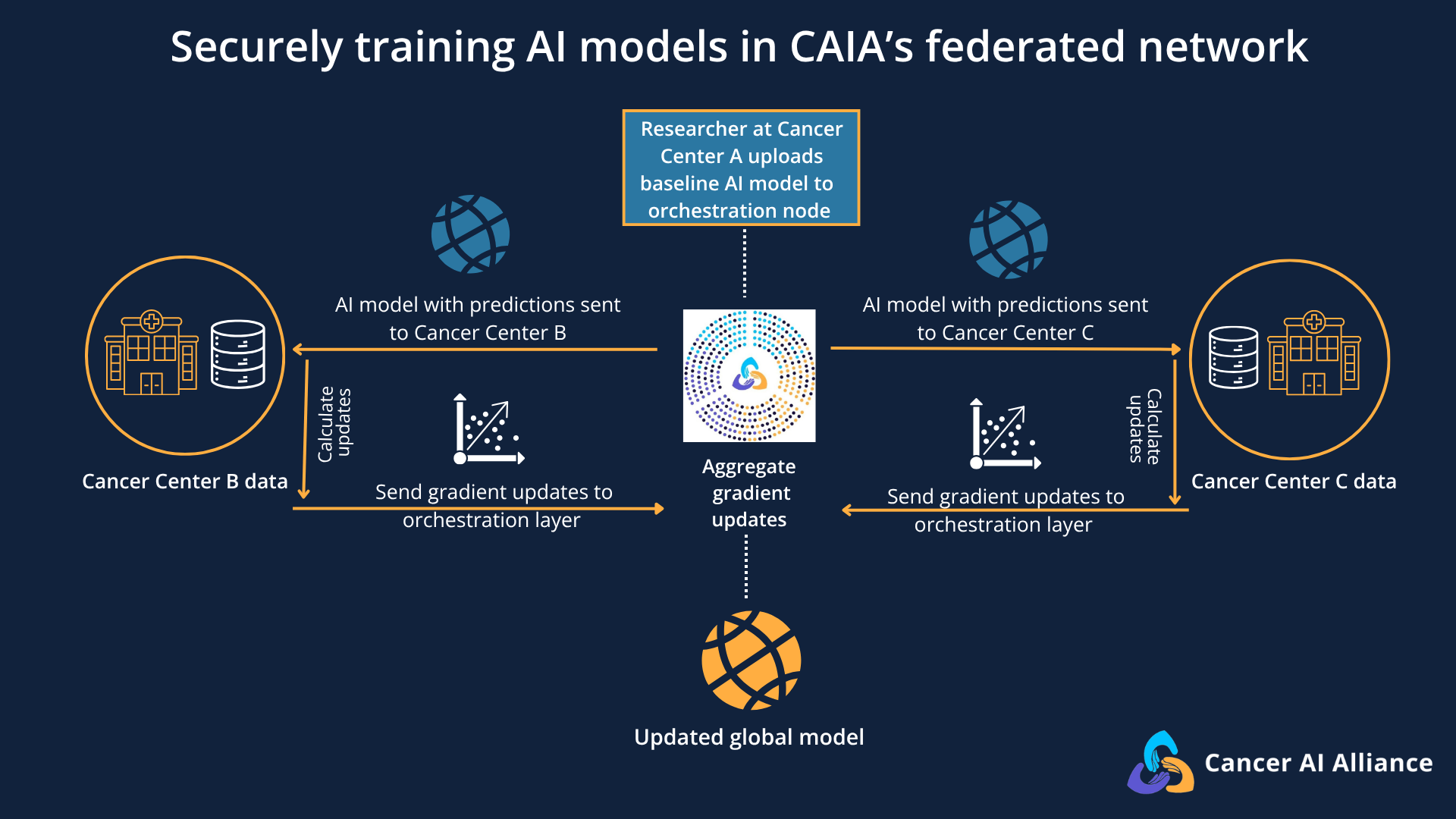
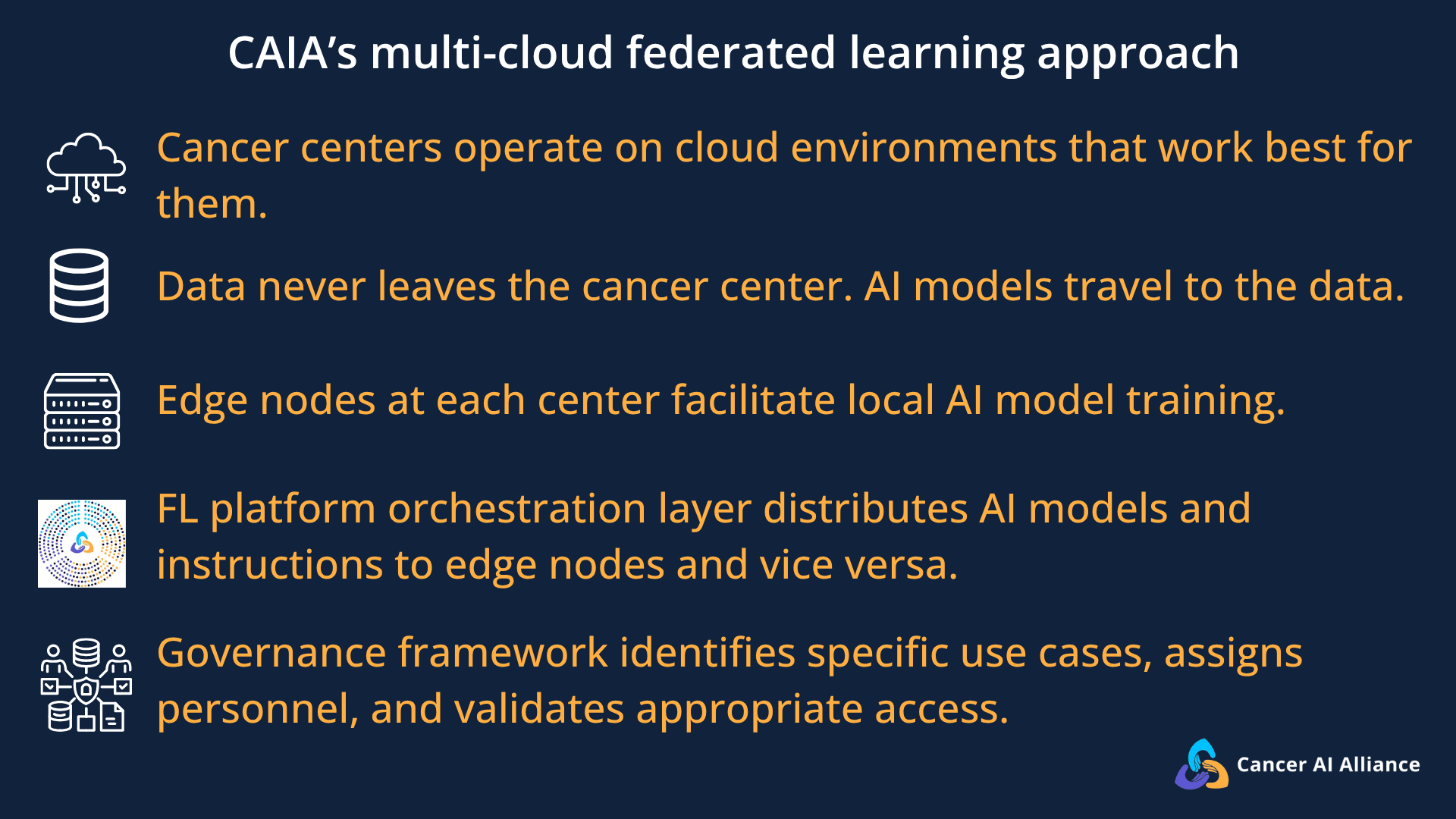
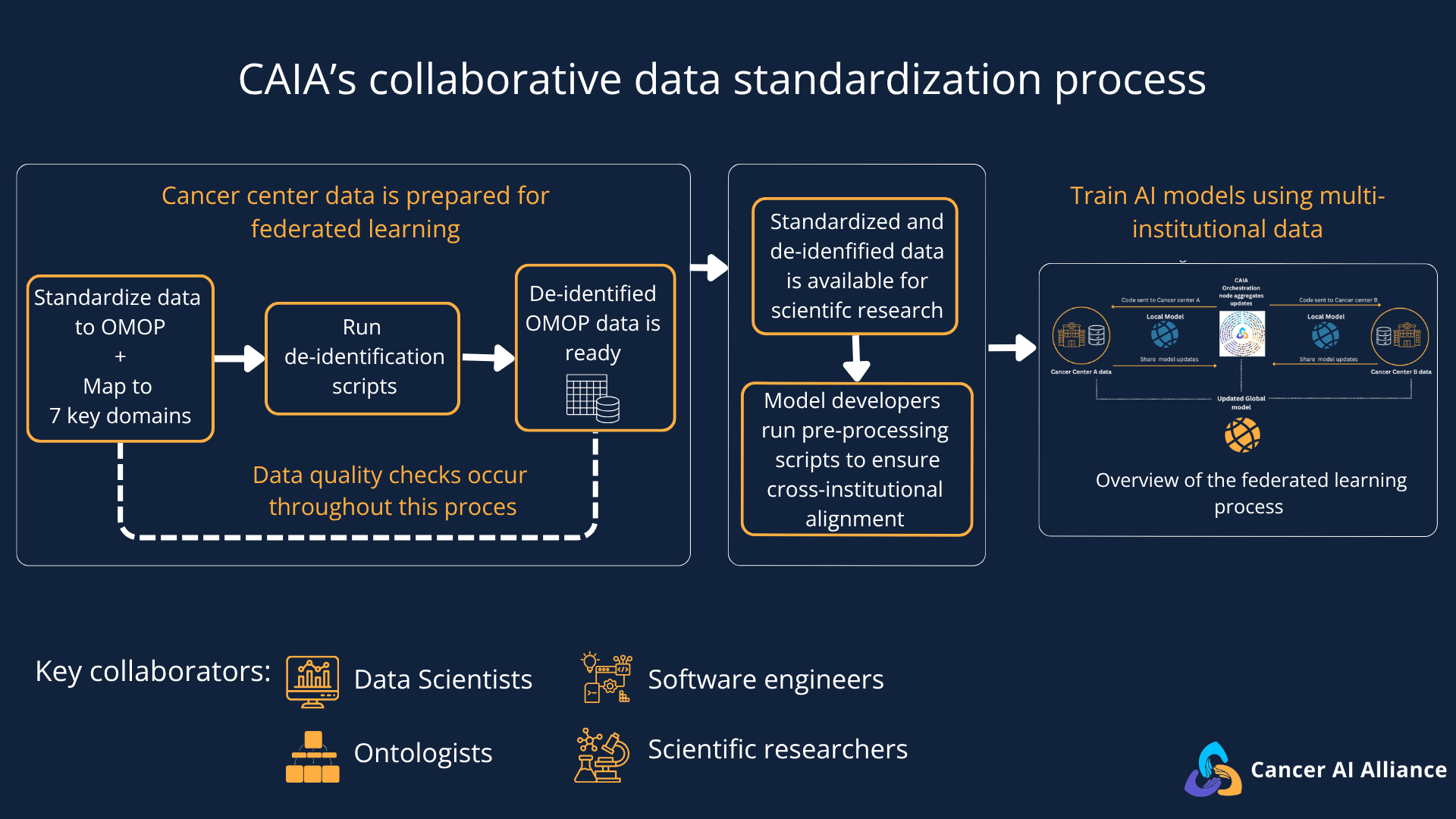
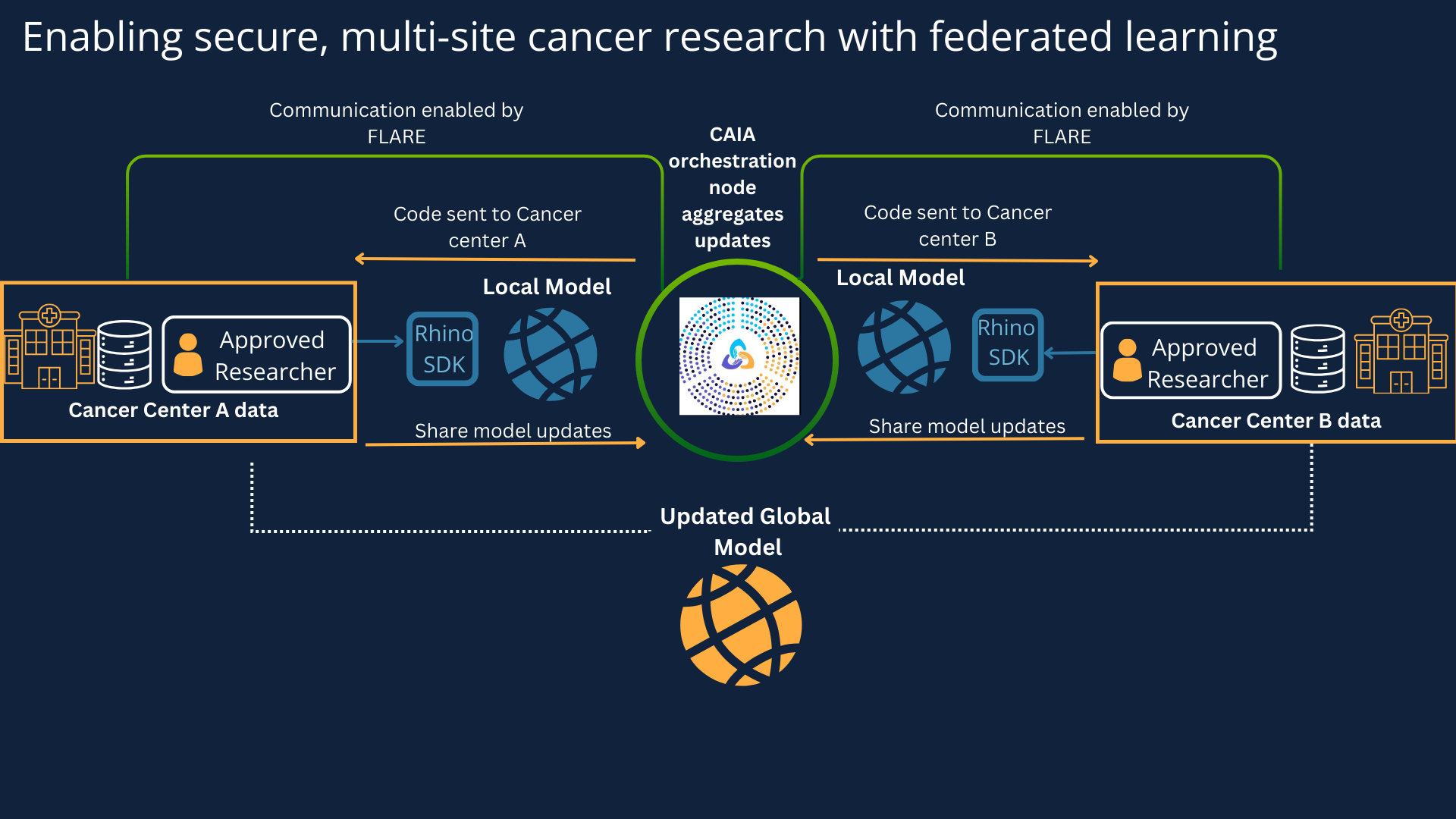
Brian also highlighted a key component of CAIA’s federated learning approach which allows institutions to keep data secure: an orchestration layer that acts as the "conductor," allowing cancer centers to collaborate on research. More importantly, these participating centers only ever share model summaries or gradients with the orchestration layer.
Each center installs an edge node environment that communicates with the central orchestrator. By leveraging these diverse and larger datasets, CAIA can better enable different types of cancer research initiatives in keeping with patient privacy guidelines.
Our in-depth blog post covers how the orchestration layer works in concert with the cancer centers’ edge node environments.
Data Security is non-negotiable
As Brian described, CAIA moved from a “cold start” to the launch of our federated learning platform in 12 months.
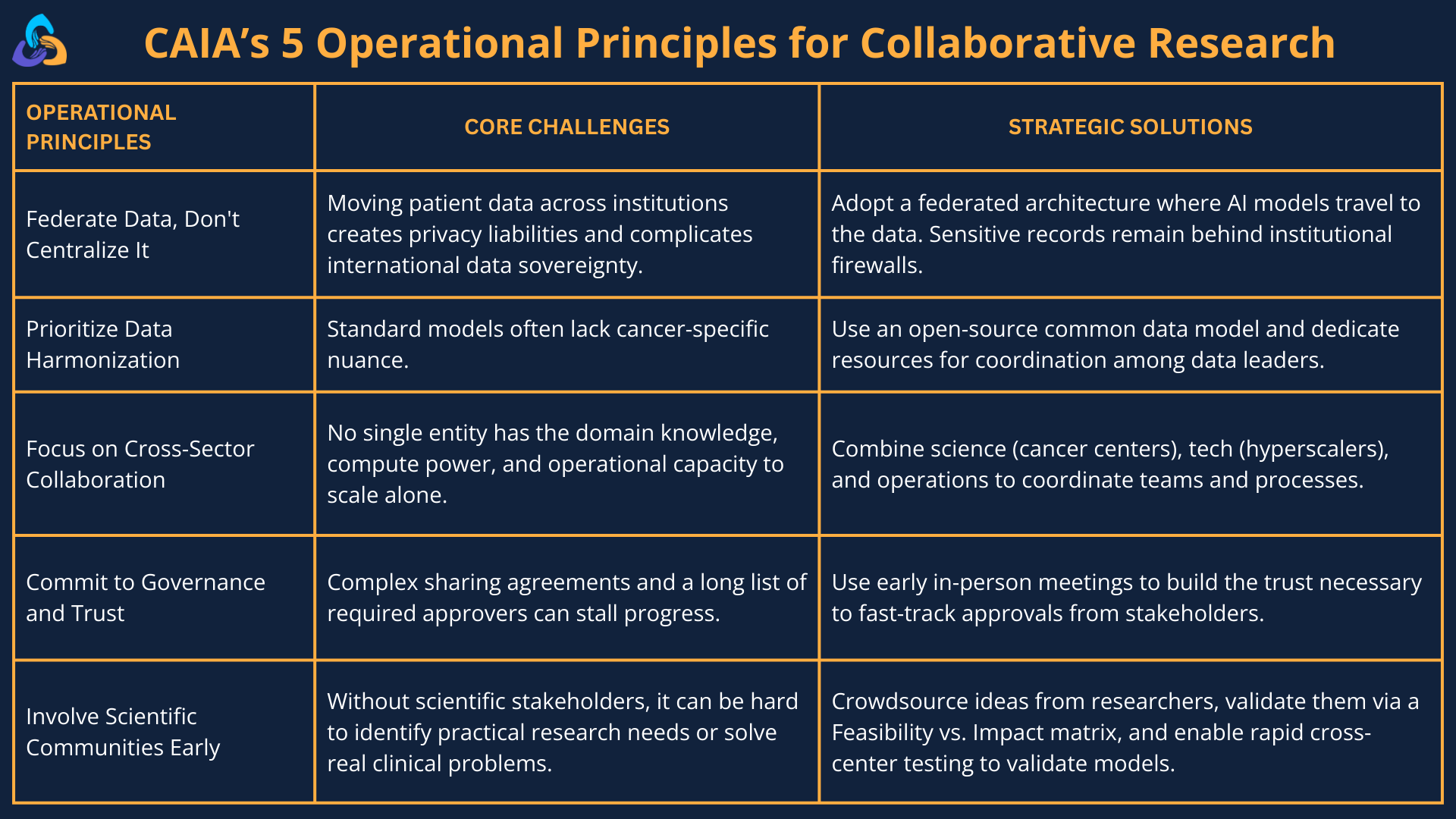
While speed was definitely a factor in getting the platform up and running, CAIA's chief operational mantra was: "Data security is non-negotiable.”
This intense focus on security was necessary for building trust among the participating cancer centers.
Committing to governance and alignment
The Google Cloud Next panel focused on trust-building when it comes to AI transformation, and the importance of cross-organizational alignment. Brian outlined CAIA’s early commitment to governance and alignment and how this allowed many organizations to work together for human-centric outcomes, under the organizing principle that cancer is non-partisan, and requires cooperation at a larger scale than before.
If you’d like to learn more about CAIA, subscribe to our newsletter for updates and follow us on LinkedIn and X.