CAIA’s first wave of cancer discovery: 8 pilot projects powered by our federated learning platform
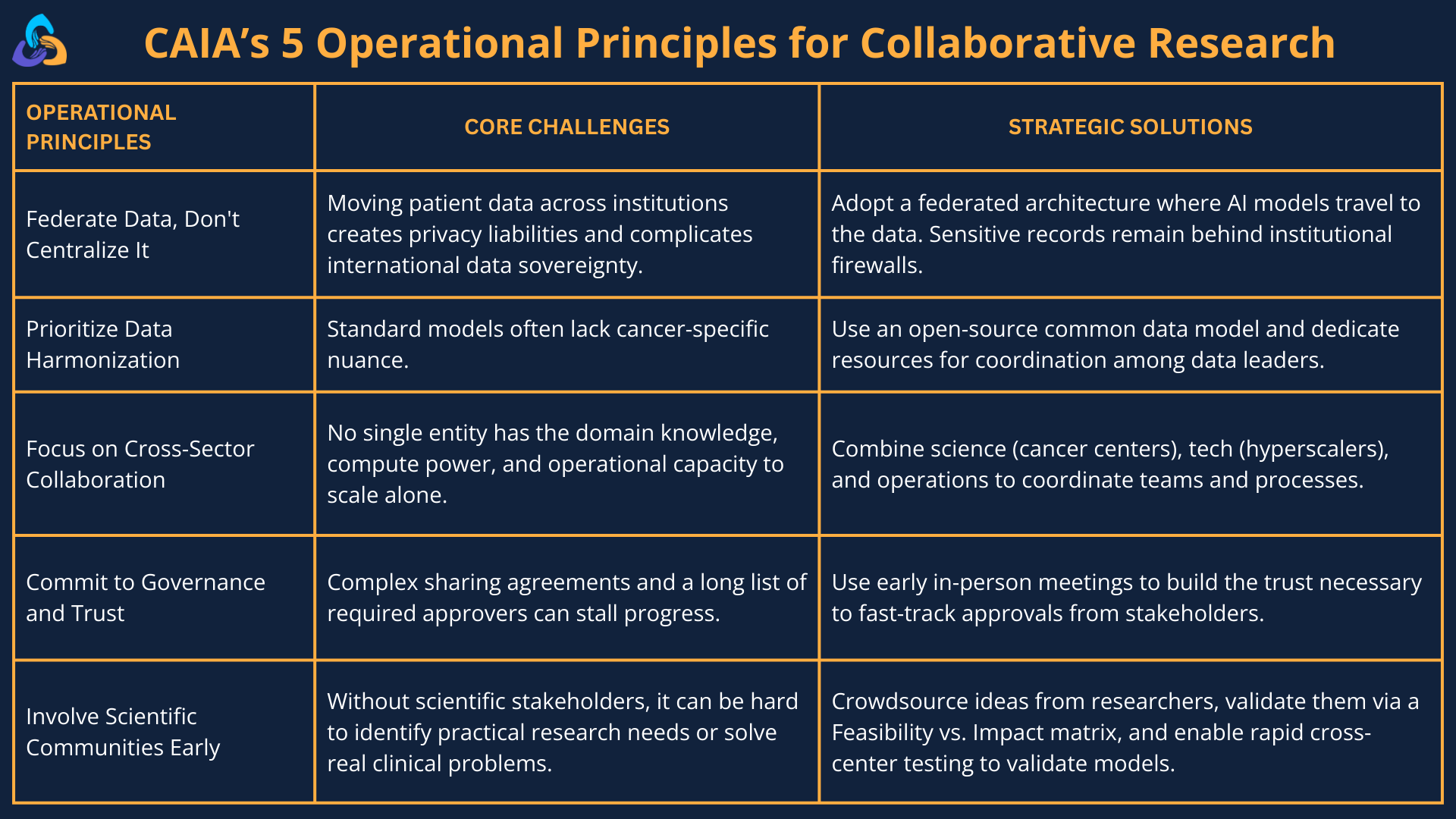
The Cancer AI Alliance (CAIA) was built on the idea that when the world’s leading cancer centers securely collaborate, we can solve challenges that no single institution could tackle alone.
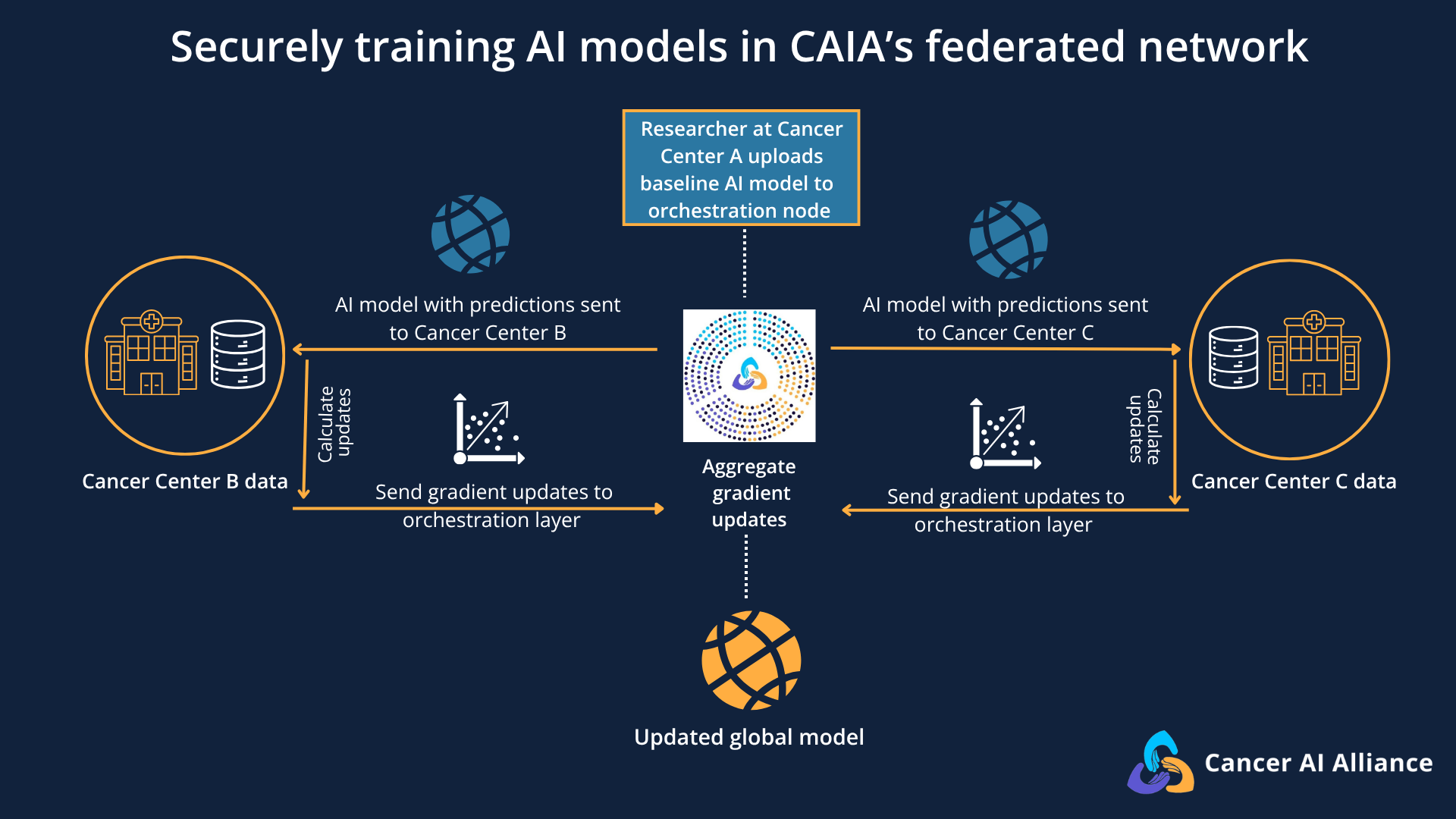
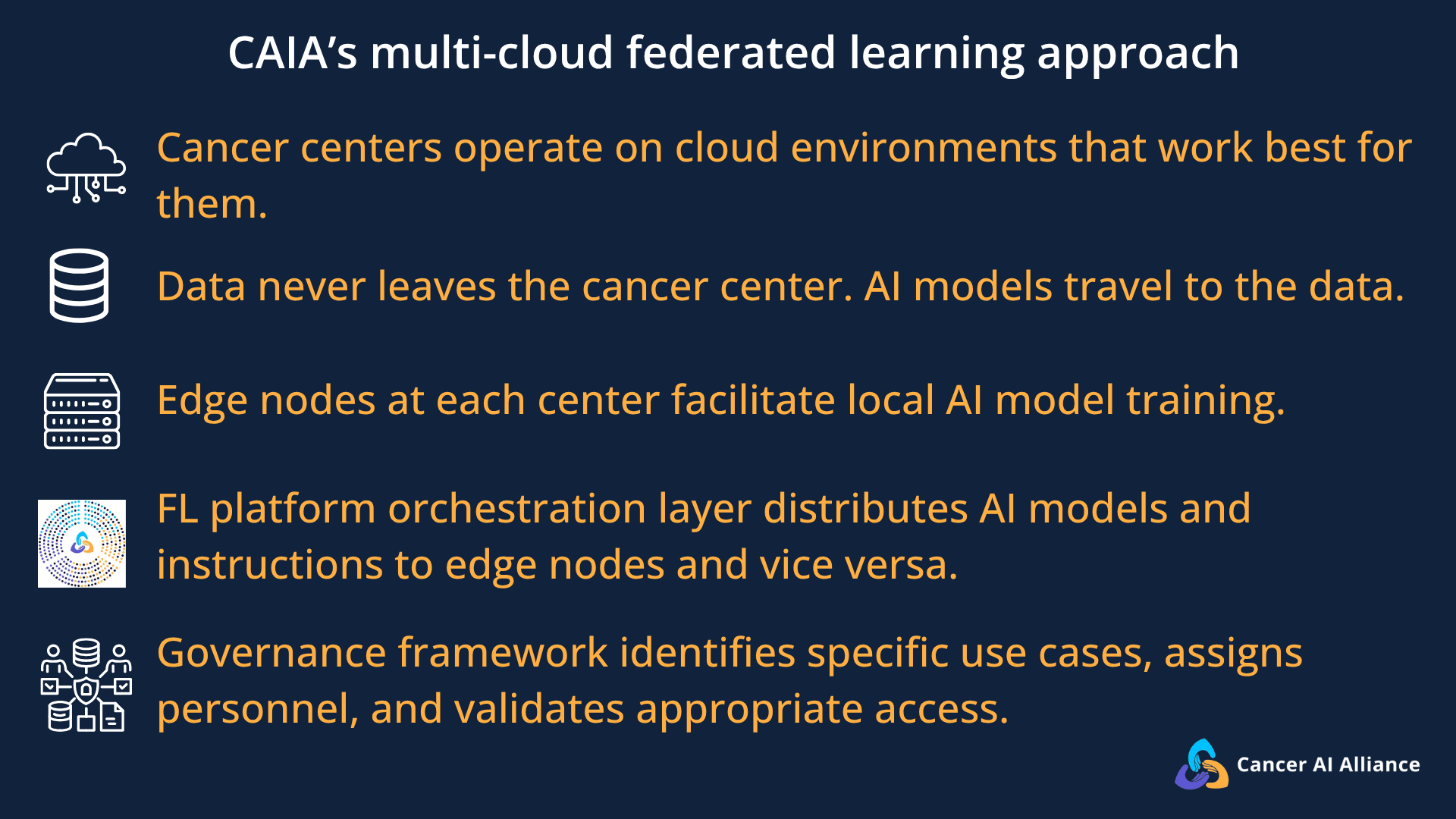
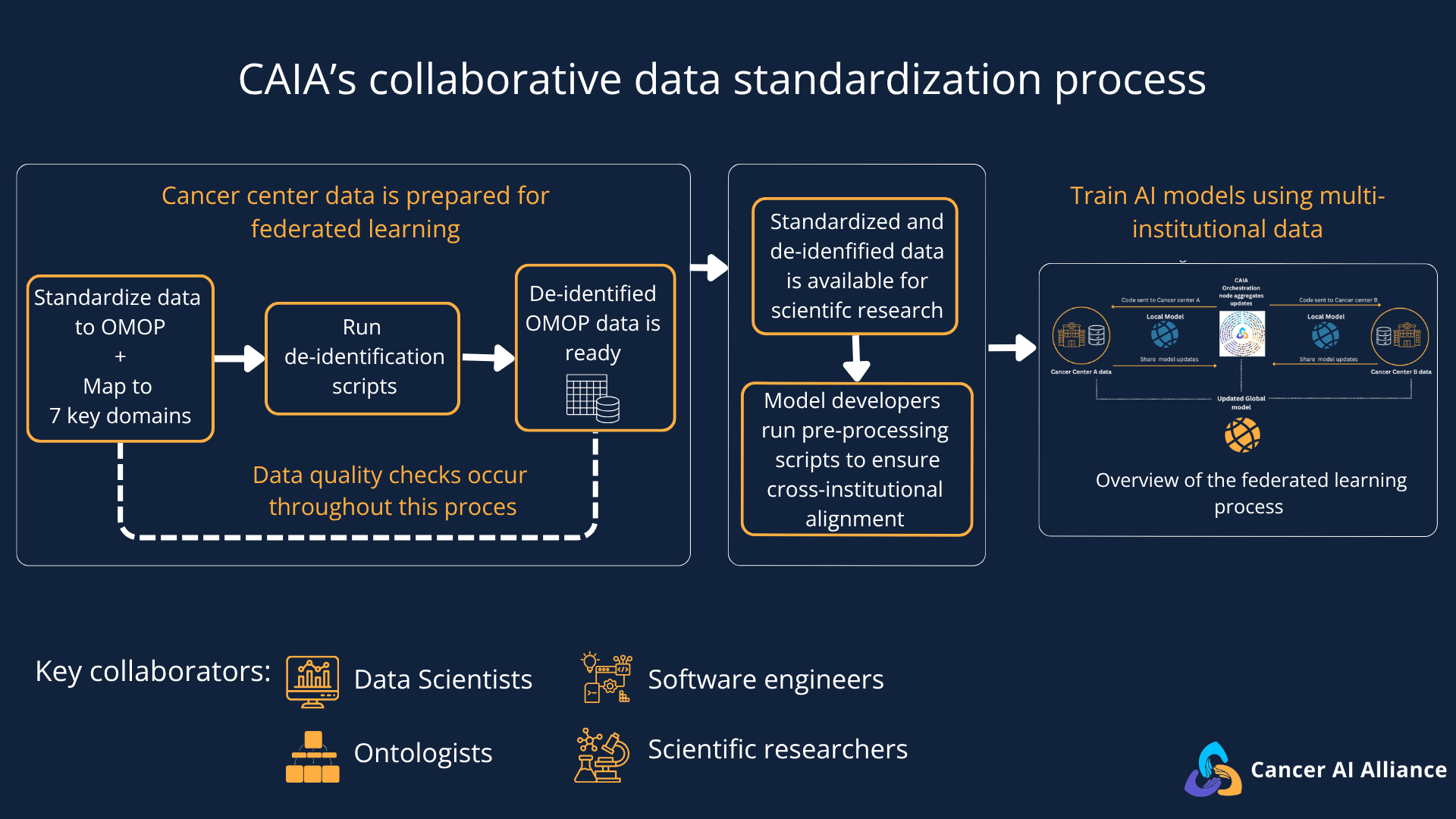
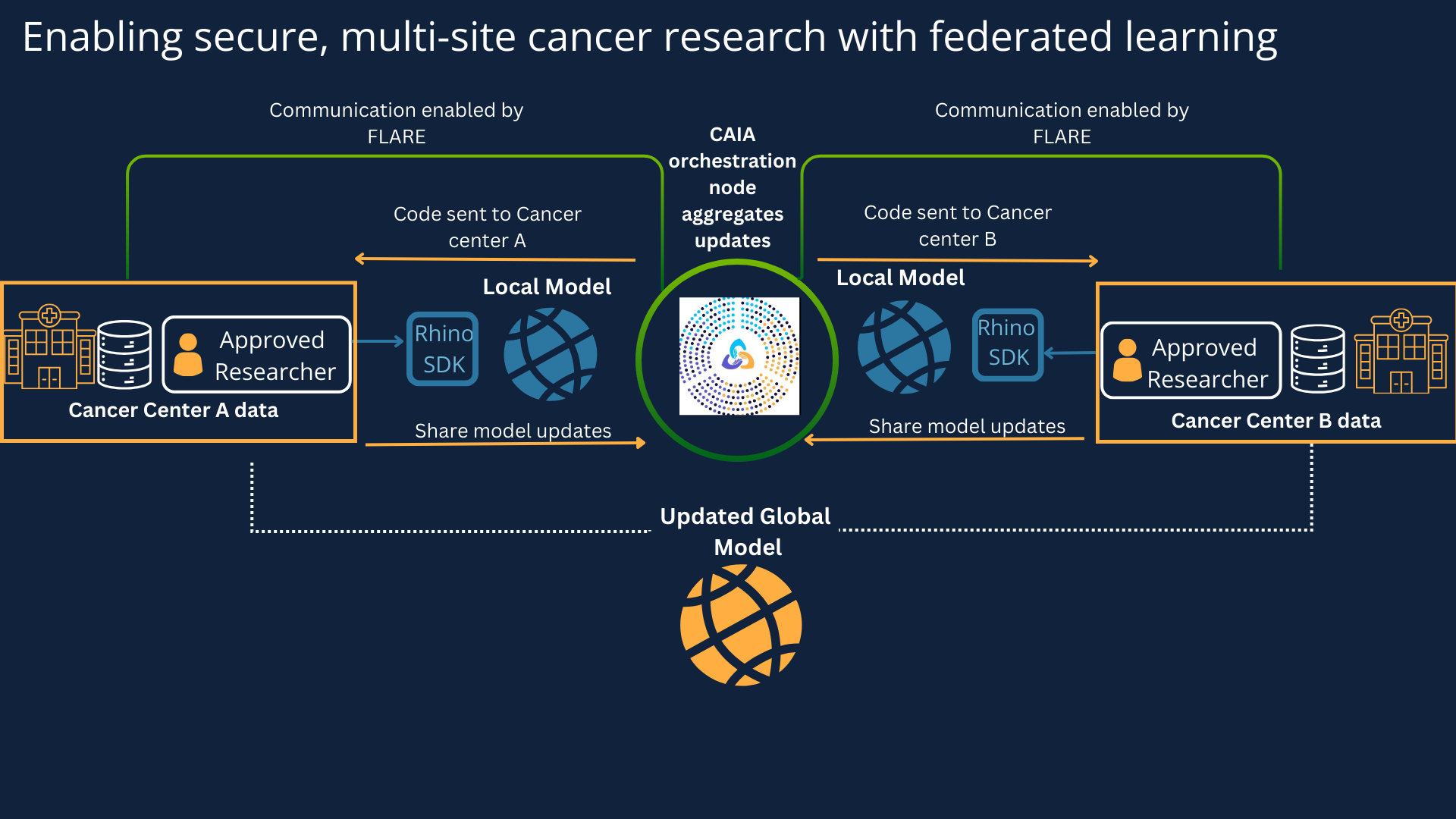
Today, our federated learning platform is a working engine for AI discovery. We are currently supporting eight unique pilot projects across our federated network. These projects represent the first wave of our efforts, proving that we can analyze vast amounts of data while keeping patient privacy secure at the local level.
Impacting clinical care today
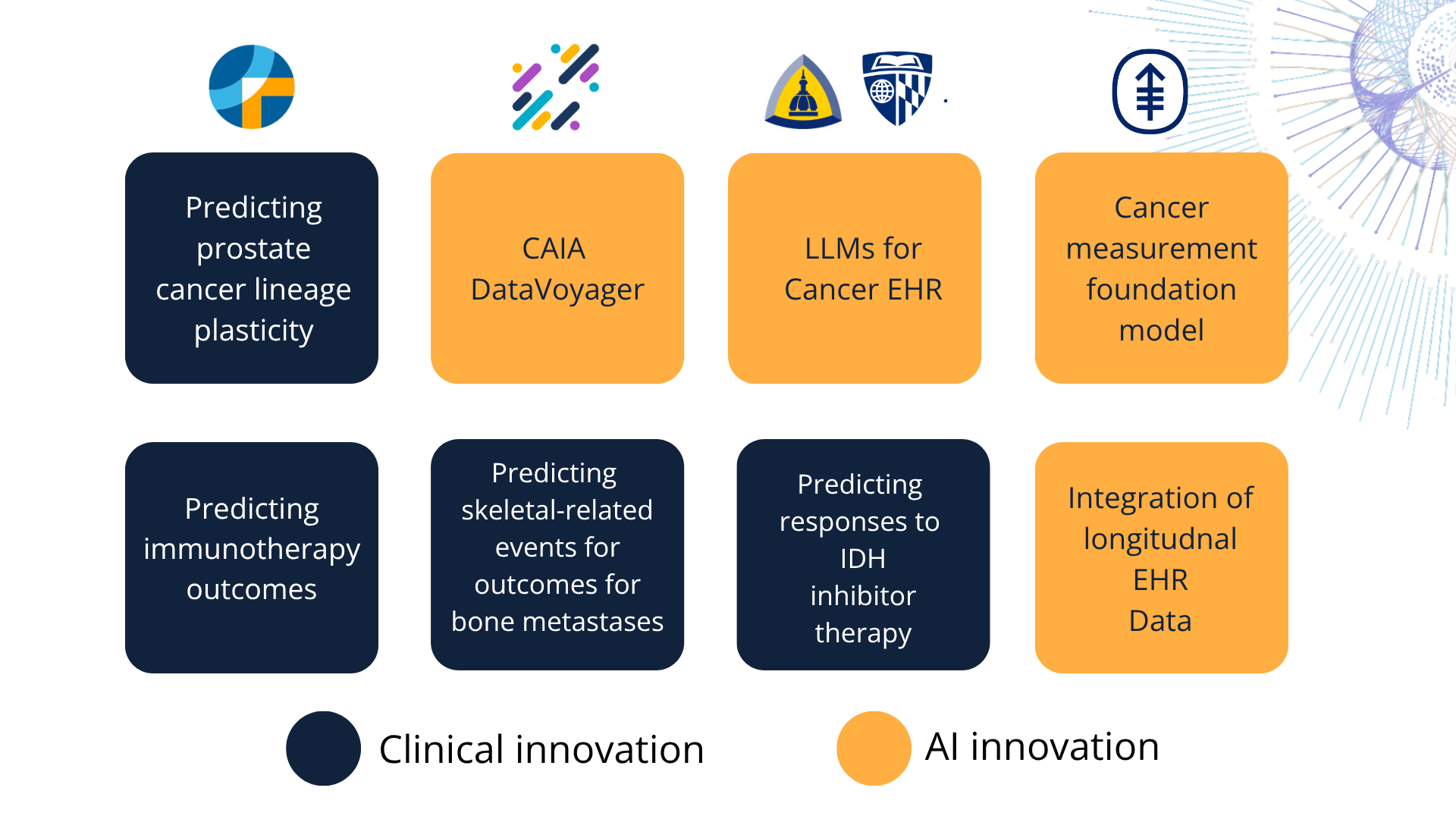
Half of CAIA’s projects are focused on clinical innovation. These use AI to answer critical questions related to patient care today. But they aren't doing it in isolation. By leveraging CAIA’s federated network, researchers can train their models on massive, de-identified datasets spanning multiple institutions. This allows them to spot rare patterns—like what predisposes a patient to severe bone fractures—that a single hospital simply doesn't have the patient volume to sufficiently understand.
Some cancers, like certain prostate cancers, survive treatment by changing their fundamental type to hide from drugs, a rare process called "lineage plasticity." Because no single hospital sees enough of these cases to study them effectively, researchers at Dana-Farber Cancer Institute are using CAIA’s federated data to detect these hidden cancers early using standard electronic records. By analyzing de-identified data across CAIA’s member institutions, researchers are studying how to use AI to spot patterns that a single hospital doesn't always have the patient volume to see.
Similarly, researchers at Fred Hutch Cancer Center are building a predictive model to identify which metastatic cancer patients are at the highest risk for severe bone fractures. Since it isn't feasible to treat every bone metastasis with radiation, this model could act as a vital predictive tool, allowing clinicians to proactively intervene for the patients who need it most.
These projects are turning cross-institutional, federated data into actionable insights for clinicians today.
Building the infrastructure for tomorrow
The other half of our projects are focused on AI innovation. If clinical innovation is about solving today's problems, AI innovation is about building the infrastructure for tomorrow. Rather than building separate AI models for every type of cancer, these projects are creating the underlying "brains": massive foundation models trained on cross-institutional data. Once these baseline models are built, future researchers can use them as tools to answer many questions based on the patterns captured in the models.
Researchers at Memorial Sloan Kettering Cancer Center are leading two connected projects to build the future of AI in cancer care.
First, instead of building new AI tools for every single clinical question, one team is creating a massive "base layer." Trained on millions of clinical data points, this AI model will enable future researchers to find answers much faster by simply adjusting this existing system.
A second team at MSK is focusing on time. Cancer isn't a single event but an ongoing experience. This team is building an AI model that learns from a patient's entire medical history, rather than a single snapshot, to predict outcomes like overall survival. By training on data from our diverse federated network, they are ensuring the tool works reliably for all types of patients.
How were these projects chosen?
These projects were sourced from scientists across our four participating cancer centers. There was then a scientific review committee that scored and prioritized more than 30 received proposed projects. They were evaluated across these criteria:
Feasibility
Scientific Advancement
AI Innovation
Benefit to Patients
Strategic Alignment to CAIA's Vision
With such diverse projects, CAIA is focused on both clinical impact and long-term innovation. By leveraging the collective, de-identified, and secure federated data of four world-class cancer centers, we are demonstrating that we can do both.
If you’d like to learn more about CAIA, subscribe to our newsletter for updates and follow us on LinkedIn and X.